Titanium Reflections: A Dream Realised at the Guggenheim Bilbao
After years of anticipation, my dream of visiting the Guggenheim Bilbao finally came true this April. The Louis Kahn's National Assembly of Bangladesh had long shown me how architecture can be monumental art, but Frank Gehry's titanium building took that idea to a new level. Spanning five days from April 1st to the 5th, this pilgrimage was more than just a gallery visit—it was a deep dive into the heart of contemporary art.
For my art blog, Feuille Obscure, I’ve curated my highlights from that rainy April 2nd morning to the sun-drenched evenings that followed.
Architectural Beauty: The Dancing Metal
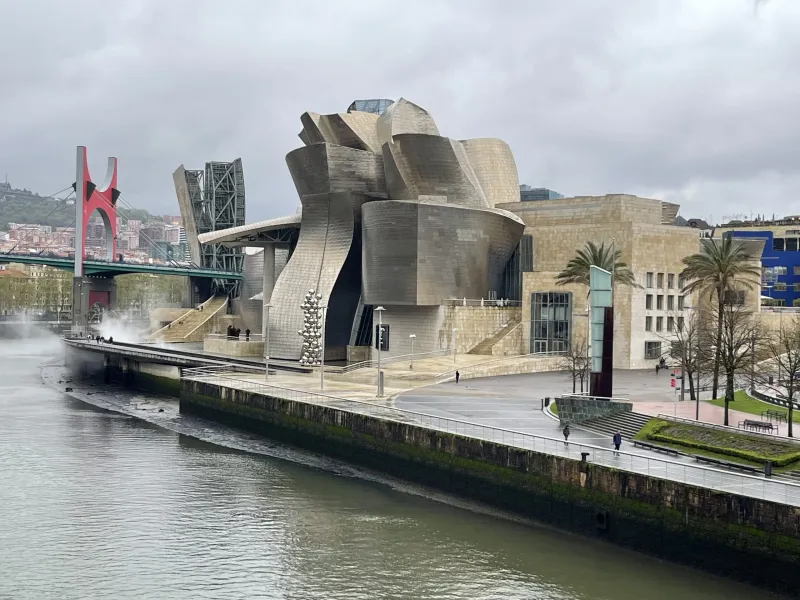
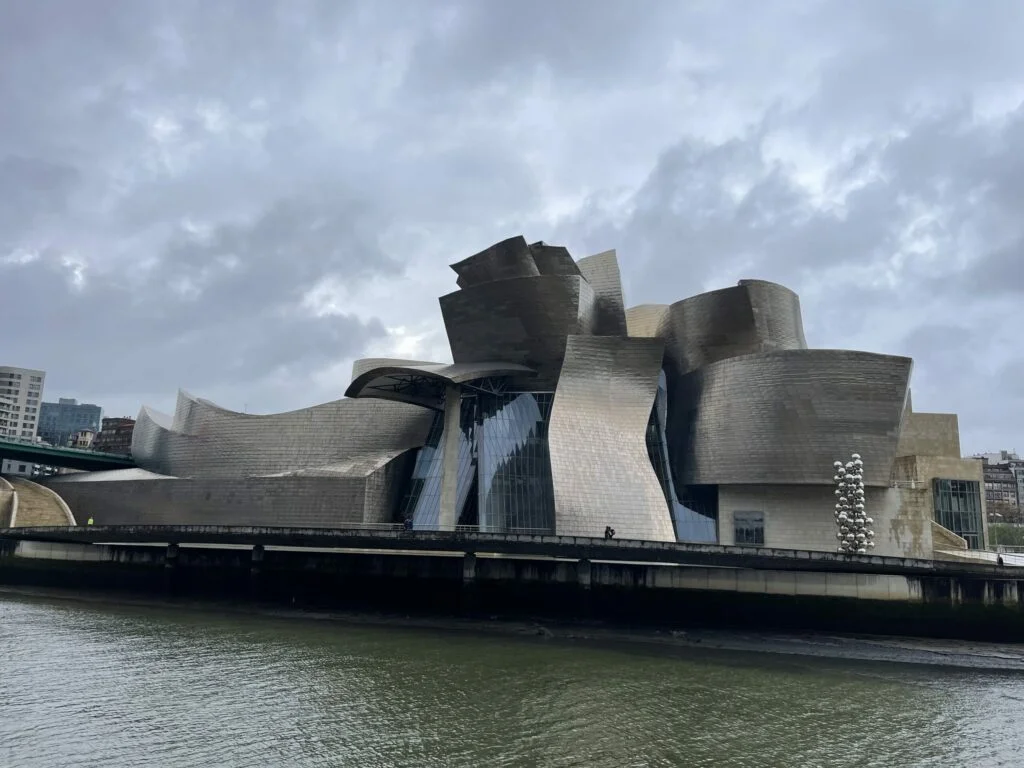
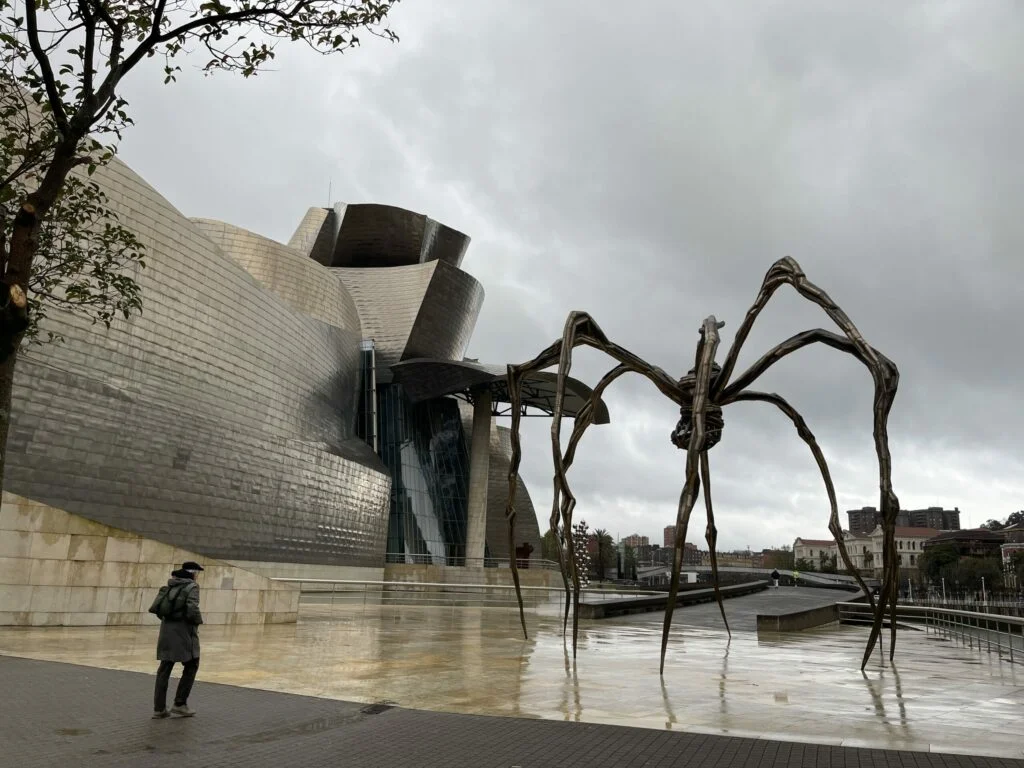
The moment you descend toward the museum, Frank Gehry’s masterpiece takes your breath away, you realise that photographs cannot capture the kinetic energy of his design. It isn't just a building; it’s a living sculpture. The museum doesn't sit on the riverbank; it ripples along it. Clad in over 33,000 titanium scales that mimic the shimmering skin of a fish, the architecture shifts colours depending on the light.
On my first two days—April 1 and 2—the Basque "sirimiri" (fine rain) gave the metal a moody, pewter-colored depth. But as the sun broke through from April 3 to 5, the titanium transformed into a brilliant, champagne-gold mirror.
Inside, the Atrium serves as the museum’s glass-and-steel lung. Looking up at the chaotic harmony of limestone pillars and glass curtains, I felt the "Bilbao Effect" in full force. It is a space that manages to feel both monumental and weightless.
The Open-Air Gallery: Riverside and Garden
The experience of the Guggenheim begins long before you scan your ticket. The exterior "garden" and riverside promenade serve as an open-air gallery where the scale of the art matches the audacity of the architecture:
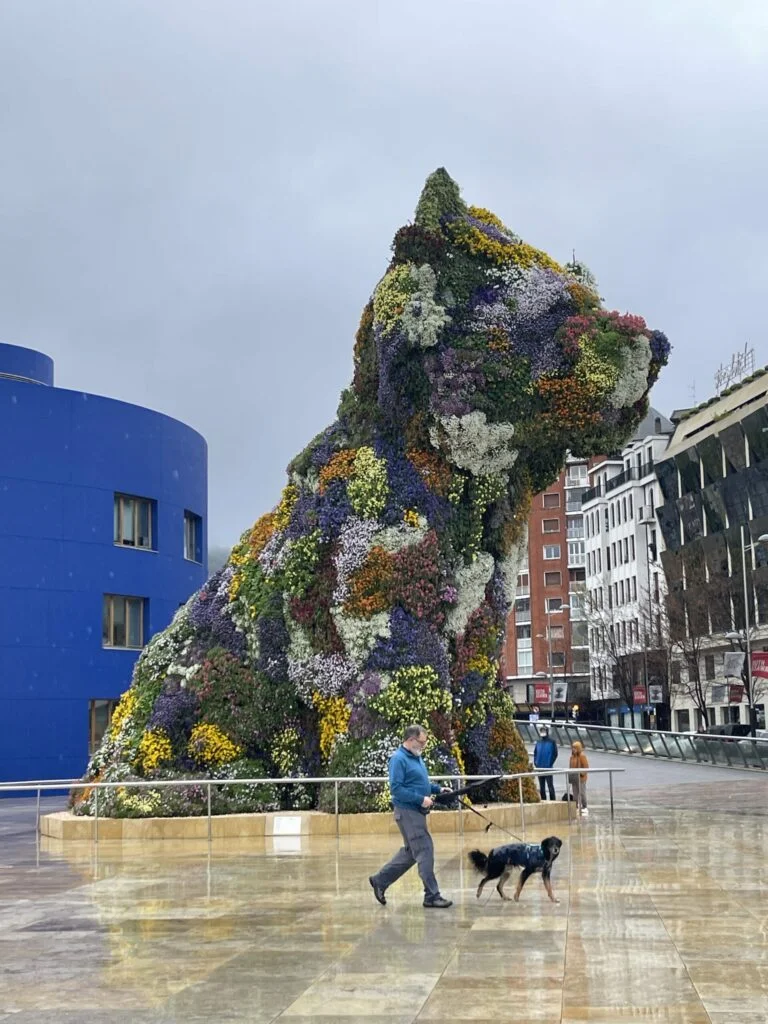
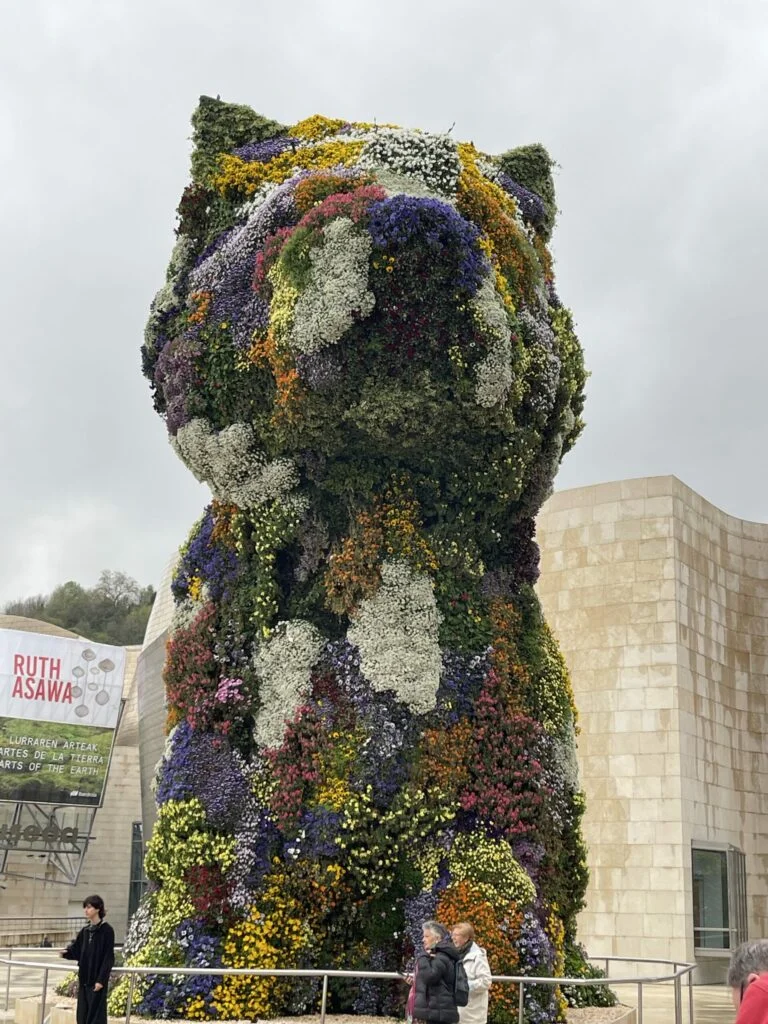
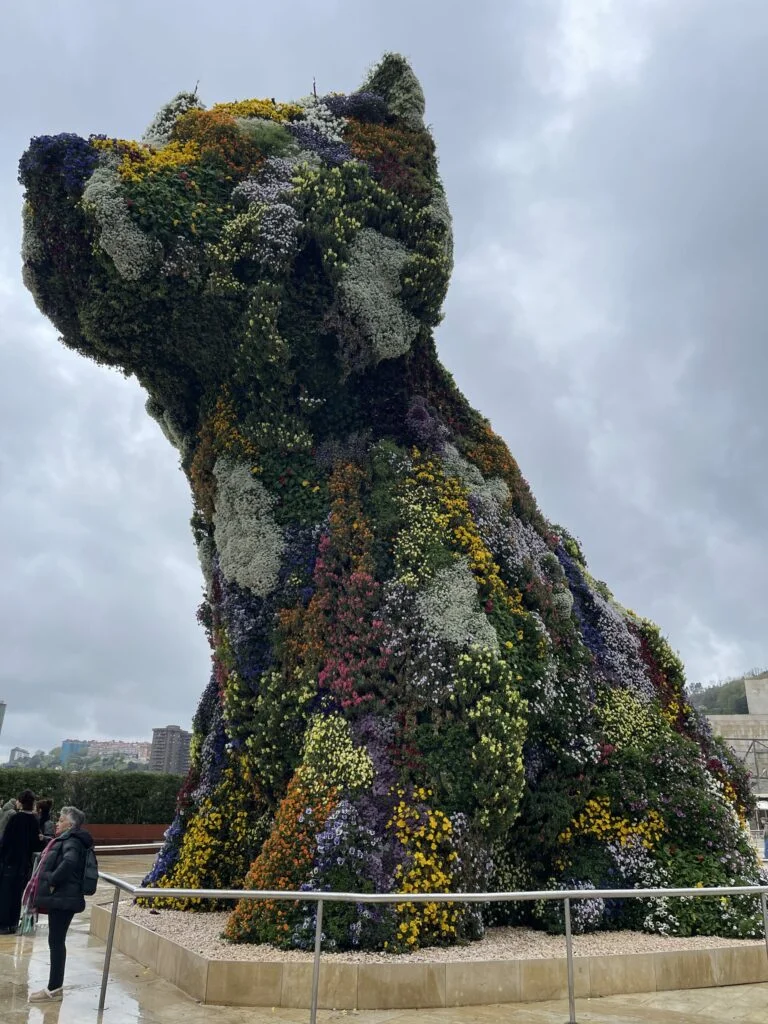
- Puppy by Jeff Koons: Standing guard at the entrance, this 12-meter-tall West Highland Terrier is covered in thousands of seasonal flowers. It is a joyous, kitsch masterpiece that feels surprisingly at home against the rigid titanium backdrop.
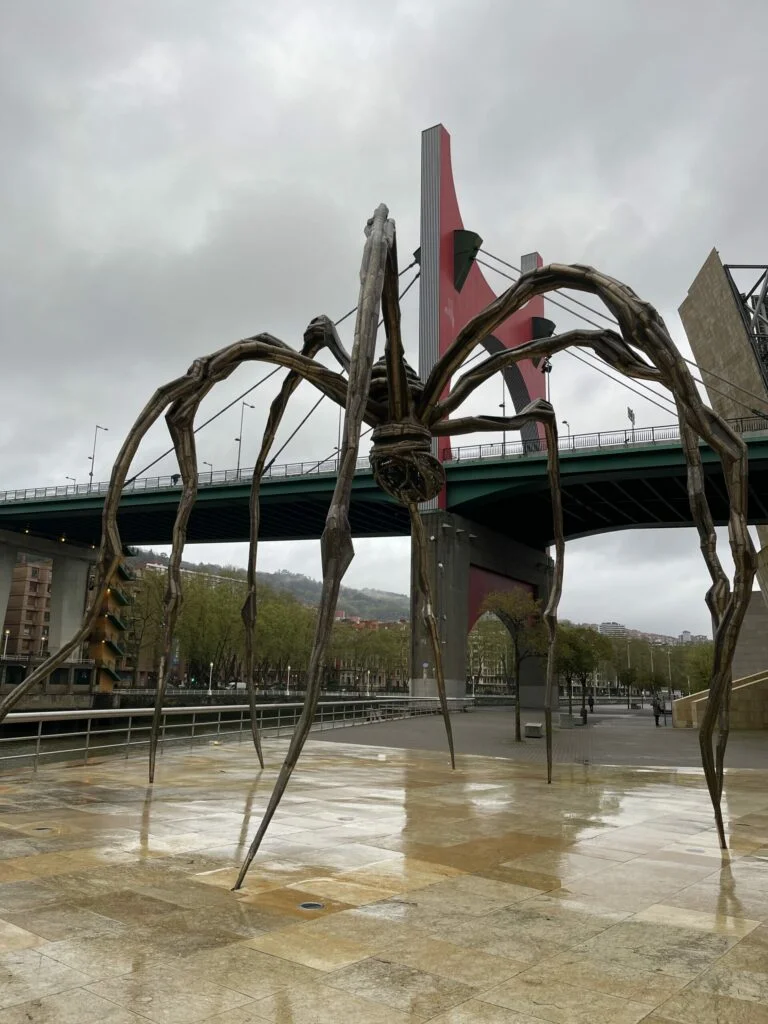
- Maman by Louise Bourgeois: On the riverside, the atmosphere shifts. Here, the bronze-and-steel spider, Maman, looms over visitors. It is an unsettling yet protective presence. Walking beneath its spindly legs, I watched the river through the cage of its body. It feels like a guardian of the threshold between the water and the stone.
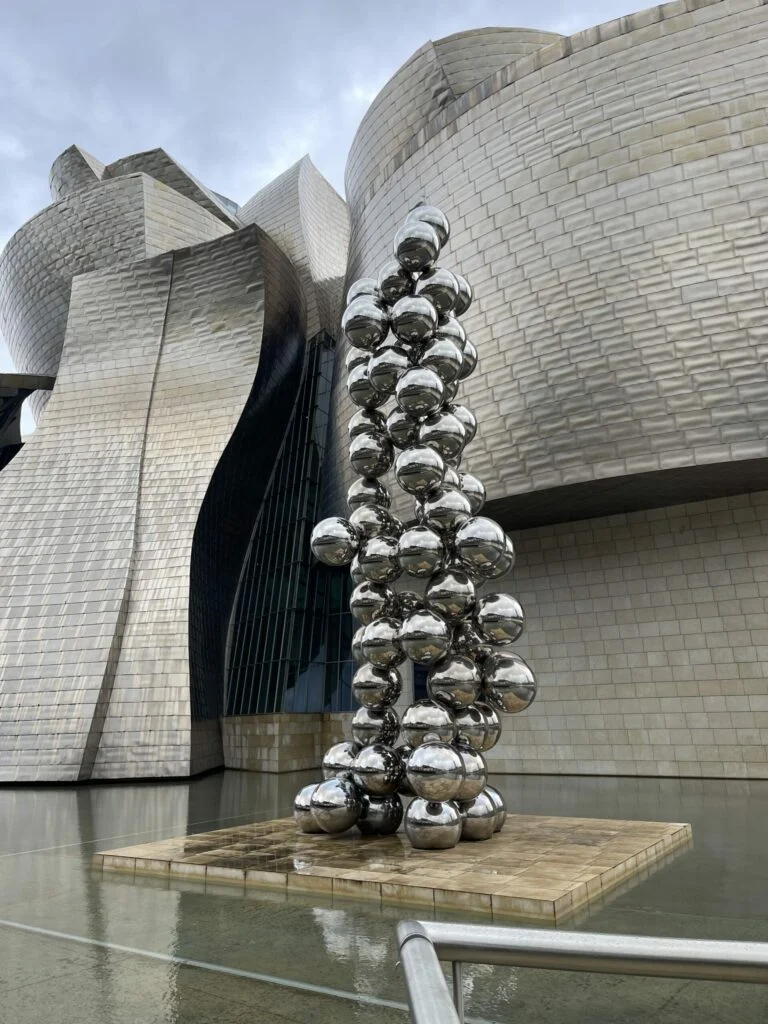
- Tall Tree & The Eye by Anish Kapoor: Near the water’s edge, Kapoor’s stack of stainless steel spheres creates a dizzying hall of mirrors, reflecting the sky and the river mist in a constant loop of silver.
Inside the Sanctum:
Moving indoors, the museum houses some of the most significant works of our time. The sheer scale of the interior galleries allows for a level of immersion you won't find anywhere else:
The Matter of Time
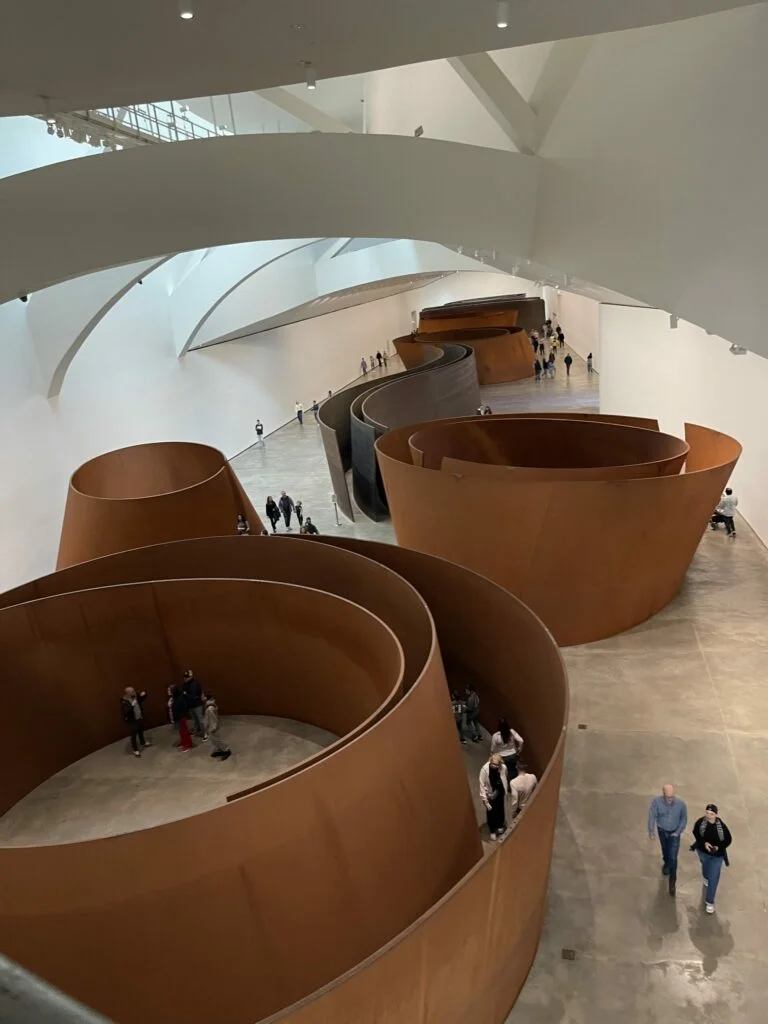
Located in the massive Gallery 104, these eight weathering steel sculptures are a masterclass in spatial perception. Walking through the spiralling "snakes" of rusted steel, your sense of equilibrium begins to tilt. The walls lean in, then peel away; the path narrows until you feel the weight of the metal on your skin, then opens into a cathedral of silence. It is an immersive meditation on how we move through space and history — a theme that feels particularly resonant when visiting a city that has so thoroughly reinvented its own timeline.
El Anatsui’s "Rising Sea"
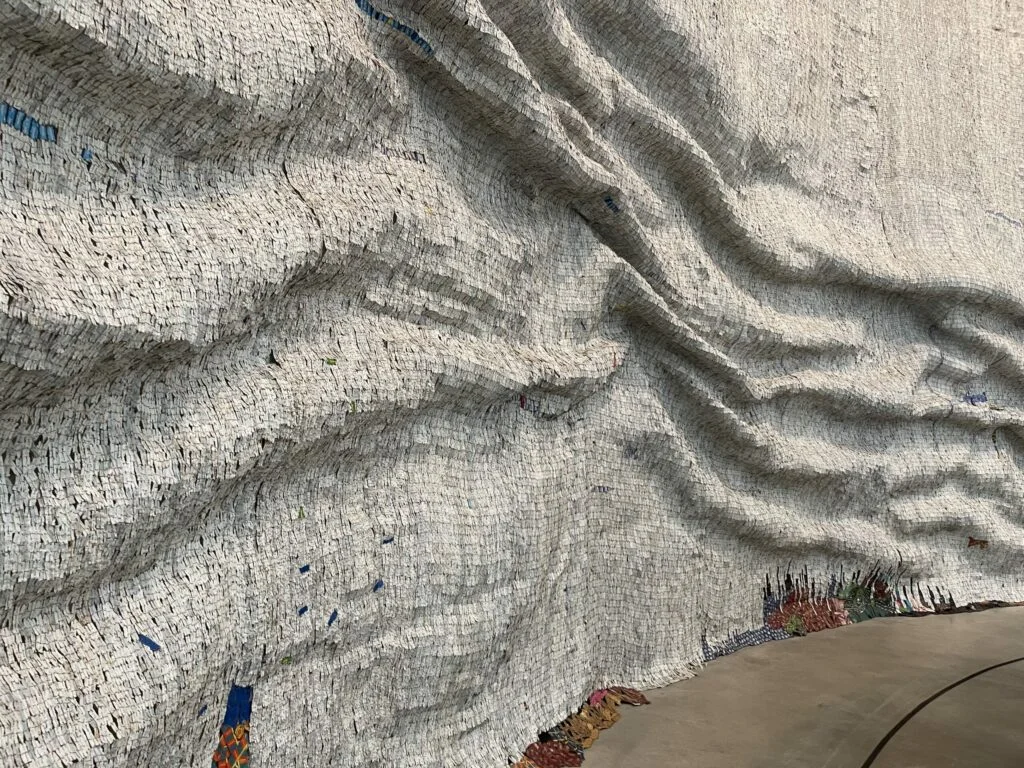
Stepping into the third-floor galleries, the dialogue between metal and history takes a more intimate, woven turn. Among the permanent collection's treasures is Rising Sea (2019) by the Ghanaian master El Anatsui, an artist who has deeply influenced my own practice with recycled materials.
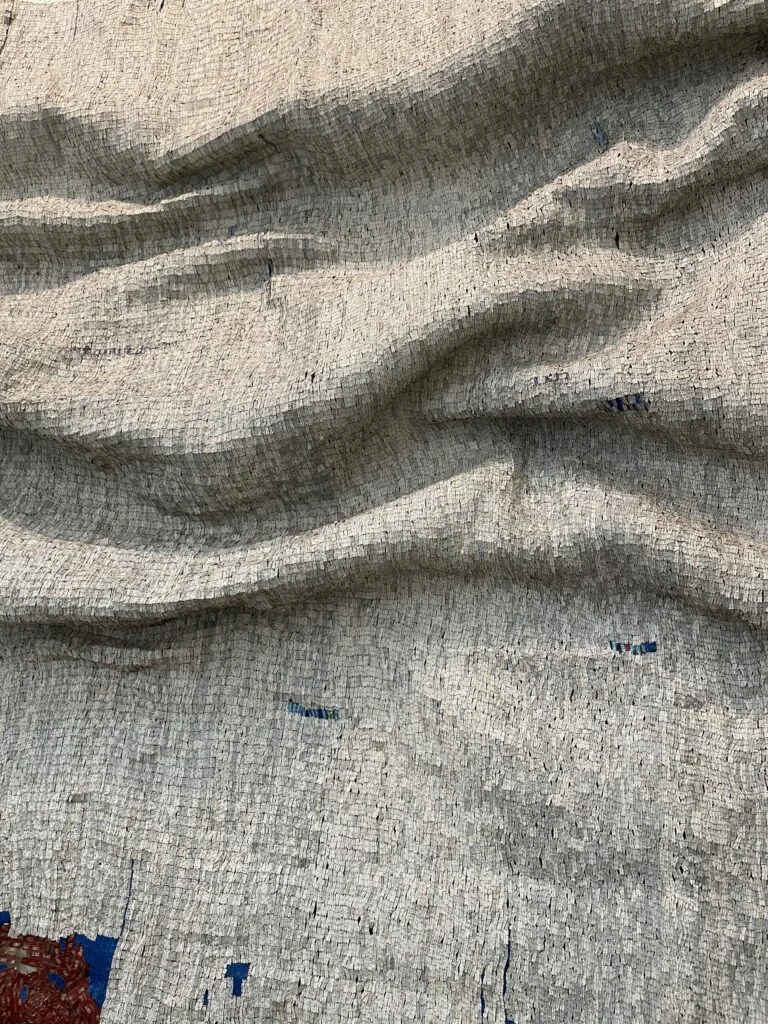
If Gehry’s architecture is a shout of industrial triumph, Anatsui’s work is a whisper of deep time. At first glance, Rising Sea looks like a massive, shimmering tapestry of silver and white silk cascading down the wall. But as you draw closer, the "fabric" reveals its true identity: thousands of discarded aluminum liquor bottle caps and screw-top seals, meticulously flattened and stitched together with copper wire.
There is a haunting beauty in how Anatsui transforms "trash" into a monument. The silver palette of this specific piece feels like a direct echo of the titanium outside, yet it carries a much heavier weight. It speaks to the "Rising Sea" of global consumption and the colonial histories of trade (alcohol for resources) that have shaped the African continent. Watching other visitors stand before it, I noticed how the work ripples with even the slightest movement of air in the gallery—a reminder that art, like the sea, is never truly static.
Infinity mirrored Room of Yayoi Kusama: A Wish for Happiness
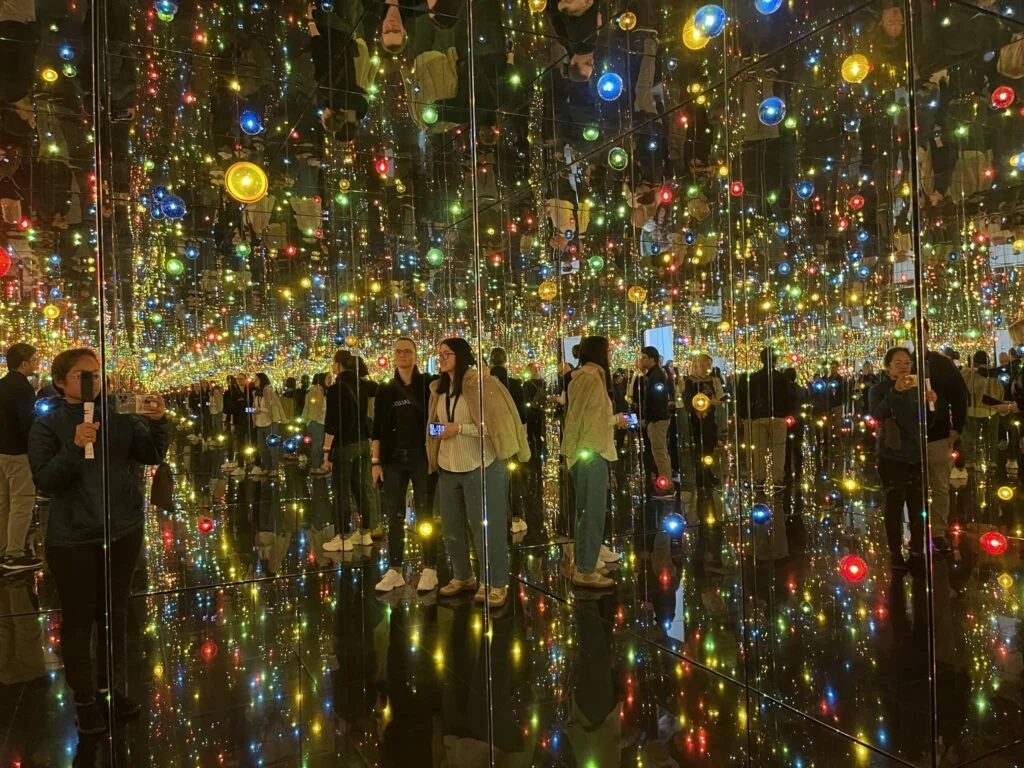
Inside the museum, the industrial weight of Serra and the metallic tapestries of Anatsui find a surreal counterpart in the works of Yayoi Kusama. For many, the highlight of the interior visit is her immersive installation, "Infinity Mirrored Room – A Wish for Human Happiness Calling from Beyond the Universe" (2020).
As you step into the room, the door closes, and the world of Bilbao vanishes. You are standing on a small walkway surrounded by mirrors on every wall, the ceiling, and the floor. Suspended in the darkness are hundreds of glowing LED lights that slowly shift through a spectrum of colors—vibrant reds, cool blues, and soft golds.
Because of the mirrors, these lights repeat infinitely in every direction, creating the illusion that you are floating in the center of a vast, star-filled nebula. For a reader of Feuille Obscure, the beauty here is in the dissolution of depth. You can no longer tell where the floor ends or where the walls begin. Your own reflection becomes just one more dot in a cosmic field.
The Night View: Light, Fire, and the Bridge
Bilbao is a city of two faces, and the night view of the Guggenheim is a mandatory experience. As darkness falls, the building is illuminated from below, turning the titanium into a glowing, skeletal structure.
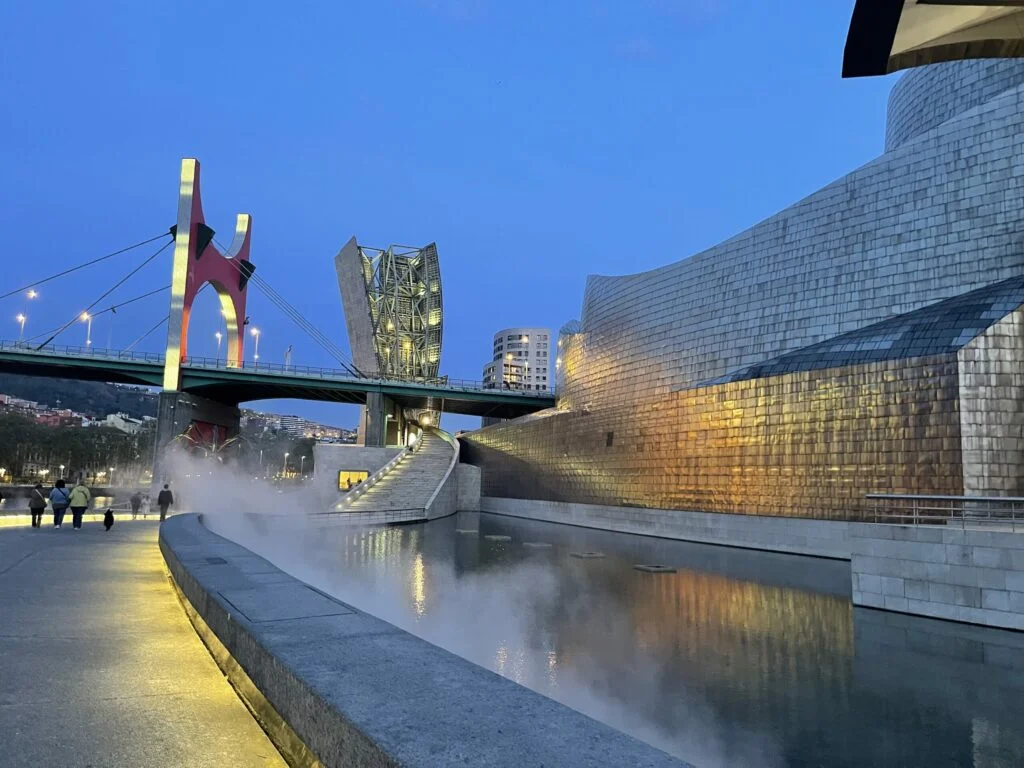
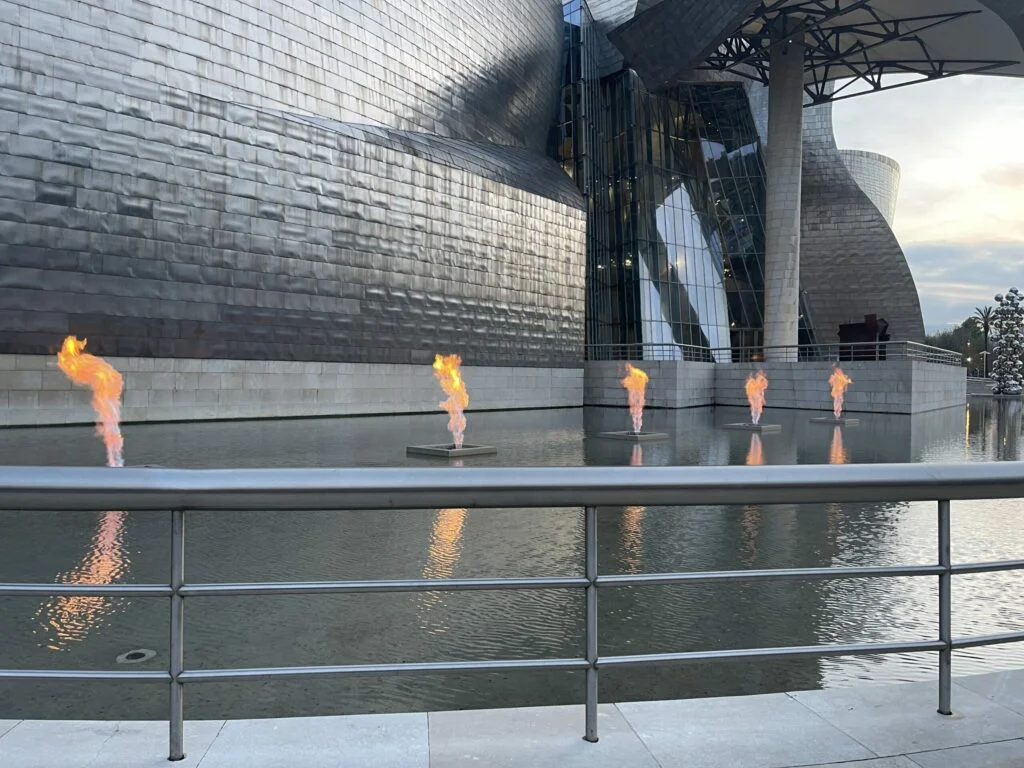
The highlight of the evening is Yves Klein's Fire Fountain. Situated in the water pond outside, these jets of fire erupt into the night air. The sight of orange flames dancing against the cool blue of the museum and the dark river is primal and breathtaking. It is the perfect marriage of the elements: earth (stone), air (the structure), water (the river), and Klein's signature fire.
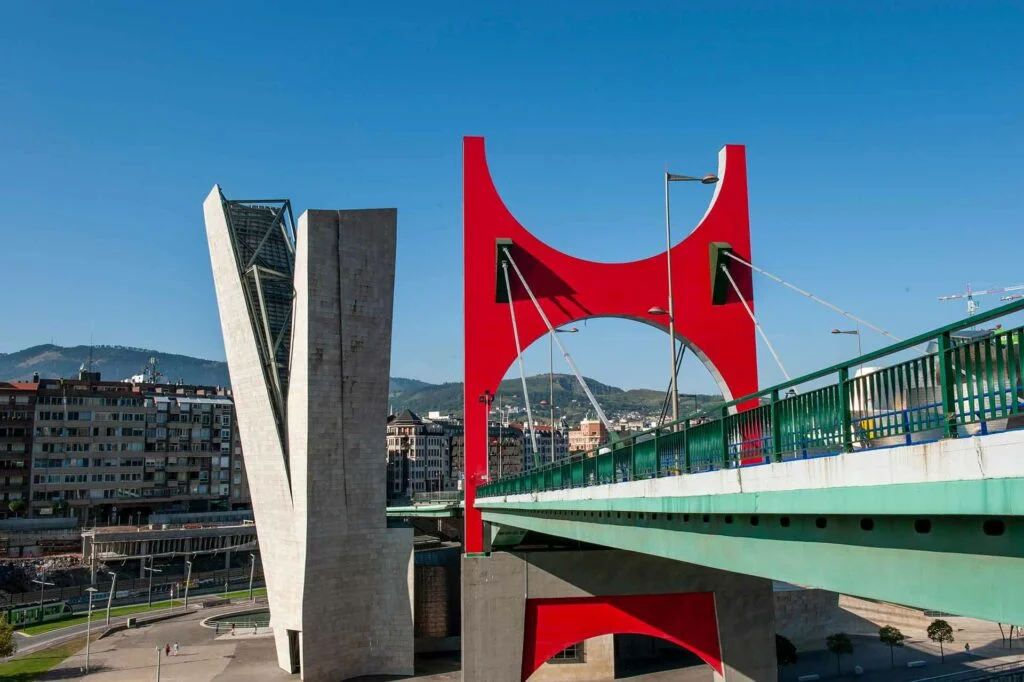
Framing this scene is the La Salve Bridge, adorned with Daniel Buren's Arcos Rojos (Red Arches). The vibrant red of the bridge cutting across the silver museum creates a high-contrast masterpiece that is best viewed after the crowds have thinned.
Guidance for Your Visit
If you are planning your own journey to this contemporary mecca, here is what you need to know:
-
Timing: Arrive at 9:45 AM, just before the doors open, to catch Puppy without the crowds.
-
The Weather Pivot: During my stay, April 1st and 2nd were rainy and misty, which gave the titanium a moody, dramatic look. However, the weather turned beautiful and sunny from April 3rd to the 5th. Be prepared for both!
-
Entry & Value: The entrance fee is approximately 15 €, which is an incredible value considering the scale of the permanent collection and the rotating exhibitions. It is, without a doubt, a must-visit for any art lover.
-
Don't Rush: There is a lot to see. Give yourself at least 4 hours to explore the inside, plus another hour for the riverside sculptures.
-
Stay for the Glow: Make sure to return at night. The combination of the illuminated Gehry architecture and the Yves Klein fire sculptures is a spiritual experience you shouldn't miss.